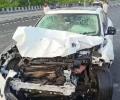
A 40-year-old pedestrian was killed after being hit by a speeding car on Ring Road in Rajouri Garden, Delhi. Police have identified and apprehended the 19-year-old driver and are investigating the incident.
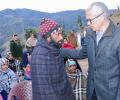
Fresh findings suggest pesticide compounds and elevated cadmium levels may be linked to the deaths of 17 people in a remote village in Rajouri district.
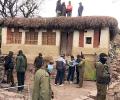
A high-level inter-ministerial team conducted a six-hour investigation in Badhaal village, Rajouri district, Jammu and Kashmir, to ascertain the causes of death of 17 members of three families under mysterious circumstances. The team, led by a director-rank officer in the Union Ministry of Home Affairs, collected samples and briefed by senior district, health and police officers. The team's visit follows the deaths of 16 people between December 7 and January 19. The investigation is ongoing, with authorities focusing on potential neurotoxins and a spring that tested positive for pesticides.
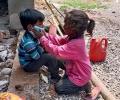
A series of deaths in a remote village in Rajouri district, Jammu and Kashmir, are not due to any disease, according to the Health Minister. Tests conducted by various institutions, including the ICMR, NCDC, and DRDE, have returned negative results. However, the minister has ordered an investigation into the deaths to determine the cause.

A 55-year-old pedestrian was killed in Delhi's Rajouri Garden after being hit by an SUV whose 27-year-old driver was allegedly under the influence of alcohol. The victim remains unidentified, while the driver has been arrested and his vehicle seized.

The family of Dr Raj Kumar Thapa, a JKAS officer killed in Pakistan shelling in Rajouri, remembers his sacrifice and dedication to duty a year after his death.

Delhi Police have arrested the prime suspect and apprehended a juvenile in connection with the murder of a 21-year-old man in Delhi's Anand Parbat area. The victim, Sagar, was allegedly killed due to a past rivalry.

A 32-year-old Nigerian national died after being apprehended by Delhi Police during an operation. An investigation is underway to determine the circumstances surrounding his death.

The Army paid a solemn tribute to Fazal, who died on Thursday after a brief illness. They remembered him as a "valiant son of the soil" who stood shoulder to shoulder with troops during Operation Sarp Vinash, which successfully dismantled terrorists' operational hub in Hill Kaka.

A remote village in Jammu and Kashmir's Rajouri district has been declared a containment zone after 17 people from three families died under suspicious circumstances. Prohibitory orders have been imposed on all public and private gatherings in the area. The village has been divided into three containment zones with varying levels of restrictions. The incident follows a visit by Chief Minister Omar Abdullah to the village on Tuesday.

Protests erupted in Kashmir following the killing of Iran's Supreme Leader Ayatollah Ali Khamenei, leading to restrictions on movement and mobile internet speeds.
Over 200 individuals in Rajouri, Jammu and Kashmir, have been quarantined after 17 people, including 13 children, died from a mysterious illness. The deaths have sparked concerns about the spread of the illness, and a medical emergency has been demanded by local officials. A central team is investigating the cause of the deaths, with over 230 samples sent for testing. Officials have identified a common factor among the deceased: brain involvement and damage to the nervous system. Three patients have been airlifted to a hospital in Jammu, and one patient has been airlifted to PGI Chandigarh for further treatment.
A mysterious illness has claimed 17 lives in Jammu and Kashmir's Rajouri district, with the latest victim being a young girl named Yasmeen Kousar. The deaths have sparked concern and an inter-ministerial team has been sent to investigate the cause. The patients experienced symptoms such as fever, pain, nausea, and loss of consciousness before dying within days of hospitalization. The J&K government has ruled out a communicable disease of bacterial or viral origin.

This was the first such attack in the past many years in the otherwise peaceful Jammu region and coincided with the first day of the New Year.
Jammu and Kashmir Lieutenant Governor Manoj Sinha dismissed two government employees, both teachers, for their alleged links with terrorists. The action is part of Sinha's zero-tolerance policy against terrorism and a broader crackdown on the terror ecosystem within Jammu and Kashmir.

Authorities have sealed three houses belonging to the affected families and shifted 21 their close relatives to government accommodation to be kept under strict monitoring.

Poonch district alone accounted for 13 civilian deaths among 28 fatalities in the Pakistani shelling and drone attacks in Jammu and Kashmir after the Indian armed forces carried out missile strikes on terror infrastructure across the border under Operation Sindoor in May in retaliation to the April 22 Pahalgam terror attack that left 26 persons, mostly tourists, dead.

A fresh exchange of fire took place on Thursday between terrorists and security personnel in Jammu and Kashmir's Rajouri district, where four Army personnel were killed and two others were injured in an encounter, officials said.

Official sources said mobile Internet services were suspended both in Poonch and Rajouri districts as a precautionary measure to check rumour-mongering and prevent miscreants from creating any law and order problem.
Two terrorists, including a top Lashkar-e-Tayiba (LeT) commander trained in Afghanistan, were killed in a gunfight with security forces on Thursday in Jammu and Kashmir's Rajouri district, officials said.
Raj Kumar Thapa, additional district development commissioner, Rajouri, and his two staff members were seriously injured when an artillery shell hit his official residence in Rajouri town, the officials said.
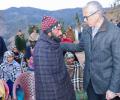
In view of the 'unidentified illness' in Rajouri's Badhal village, the village has been declared a containment zone, and the affected families' homes sealed; a few patients brought to Government Medical College (GMC) in Rajouri on Thursday.

The Pakistanis were so fearful of Brigadier Mohammad Usman, the 'Lion of Naushera', that they announced a Rs 50,000 bounty on his head.

People along the Line of Control and International Border in the Jammu region continue to live under the shadow of death, with unexploded mortar shells fired by Pakistani troops still embedded in farmlands and residential areas even though hostilities have stopped for nearly a week. IMAGE: Kindly note that this image has been posted for representational purposes only. Photograph: / Rediff.com Despite the May 10 understanding between India and Pakistan, locals describe the border areas as a 'death trap'. Sixty-two-year-old Balvinder Singh, who returned to his home in Pargwal sector on May 14, recounted a narrow escape. "Two shells exploded in our compound, damaging our house. Three more landed on our farmland. We were terrified and told our family to stay away from the fields until the Army could help," Singh told PTI. Army engineers later came to the village and safely defused the unexploded shells, bringing a temporary sense of relief. "Fear is writ large on the faces of people to these death traps in border hamlets", he said. Scenes of destruction are evident rooftops torn apart, broken houses, windows punctured by shrapnel, and carcasses of cattle lying in pools of blood. The acrid smell of gunpowder still lingers in the air. Sardar Gurmeet Singh faced a similar ordeal. His family could not re-enter their home as a live mortar shell had sunk into the compound in a village close to the International Border. "The army's bomb disposal squad removed it after four days, allowing us to finally enter, back home," he said. Indian Army engineers have launched a sweeping clearance operation across border districts, defusing over 80 unexploded shells in the past five days -- including 6 in Pargwal, 19 in Rajouri, 42 in Poonch, and 12 along the IB. "These shells, mostly 120 mm calibre, have a range of 15 to 30 km and pose a serious threat to both civilian and military targets," an Army officer said. "Many of them were fired by Pakistan during recent hostilities." On May 7, the Indian Army launched Operation Sindoor, conducting precision strikes on nine terror hubs in Pakistan and Pakistan-occupied Jammu and Kashmir (PoJK) in response to the April 22 terror attack in Pahalgam that killed 26 people, most of them tourists. The subsequent retaliation by Pakistan pushed the region to the brink of war. From 7 to 10 of May, 27 civilians were killed and over 70 injured in Pakistani shelling in the Jammu region. Farid Din Gujjar, a resident near the border, expressed fear about returning to his fields. "Several shells created deep craters in our paddy land. We cannot resume work until all unexploded ordnance is cleared. It's a death trap," he said. Army units, in coordination with Jammu and Kashmir Police, have evacuated high-risk zones and issued stern warnings to residents not to touch any suspicious objects or unexploded shells. In one major operation, 42 live shells were safely destroyed in the Poonch villages of Jhullas, Salotri, Dharati and Salani. "All safety protocols were followed. The shells posed a serious danger to local lives," an Army spokesperson said, calling the effort a 'continued commitment to protect civilians and restore normalcy'. Poonch saw the vast majority of deaths due to shelling. Security officials said that Pakistan used a mix of mortar shells, armed drones, and missiles during the shelling spree, specifically targeting civilian habitations and border towns in Jammu, Samba, Kathua, Rajouri, and Poonch. As clearance operations continue, the border residents are slowly returning to their homes, but with caution, fear, and lingering uncertainty about shelling that may yet happen in the future.

The fierce gunfight was going on in the area with the induction of more troops to neutralise two terrorists trapped at the spot, they said.
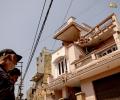
The casualties were reported hours before India and Pakistan agreed to end hostilities, which soared after the Indian Armed Forces hit terror launchpads in Pakistan and Pakistan-occupied Kashmir earlier this week in response to the Pahalgam attack.

The worst-hit in the Pakistani shelling was Poonch district which accounted for all the civilian deaths, the officials said, adding 28 persons were also injured and the condition of some of them was stated to be critical.
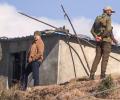
A five-member team of experts from AIIMS Delhi, including specialists in toxicology, is investigating a mysterious illness that has claimed 17 lives in Jammu and Kashmir's Rajouri district. The team has spoken to 11 patients undergoing treatment and will collect samples from affected homes and surrounding areas to determine the cause of toxicity. Meanwhile, no new cases have been reported in the past nine days, and the village has been declared a containment zone with strict measures in place to prevent further spread.

Glimpses from around the world that will make you smile and cry.

Security and defence experts have called for immediate strengthening of the security management and intelligence network along the Line of Control (LoC) in Jammu region, which witnessed the killing of 59 people, including 24 security personnel and 28 terrorists, in terror incidents this year.

A second terrorist was killed in an encounter with security forces on Wednesday, raising the death toll during the ongoing three-day search operation in a remote village in Jammu and Kashmir's Rajouri district to three, officials said.

His elder brother Om Prakash Chettri, who recently retired from the Army, said Siddhant was passionate only about serving the nation.

Amid growing concern over the mysterious death of 14 persons in a remote village in Jammu and Kashmir over the past one month, health experts on Tuesday said certain neurotoxins have been found in the samples of the deceased.

To counter the threat and thwart the attempts of Pakistan-based handlers to spread terror in the peaceful areas of the region, officials said the Army, in close synergy with the police and the central armed police forces, has launched relentless operations in the vulnerable regions, especially in the dense forests.

The tragedy struck the family on May 7 when they found themselves in the middle of intense Pakistani shelling at their rented accommodation in Poonch which was badly hit by the cross-border shelling.
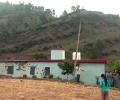
Heavy Pakistani shelling in the border district of Poonch in Jammu and Kashmir left nine people dead and 28 injured. The shelling, described by residents and officials as "barbaric and cowardly", started around 2 am, damaging dozens of residential houses, shops, vehicles, and heritage sites. The incident comes after India launched "Operation Sindoor" in retaliation to the April 22 Pahalgam terror attack. India condemned the act, calling it a cowardly attack on civilians, and reaffirmed that civilian safety remains its top priority.
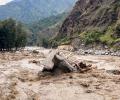
While two bodies were recovered on Wednesday, the death toll climbed to four on Thursday after the recovery of two more bodies from the Indira Priyadarshini Hydroelectric project site in Kangra district.

The Pakistan Army continued shelling along the Line of Control (LoC) in four sectors of Jammu and Kashmir, prompting a befitting response by the Indian Army, officials said on Thursday. The intensity of cross-border firing was less than Wednesday, when Pakistan Army carried out one of the most intense artillery and mortar shelling in years targeting the forward villages in J-K following missile strikes by India as part of 'Operation Sindoor'.

Three civilians picked up by the Army for questioning after the terrorist ambushed two Army vehicles on Thursday at Dhatyar Morh between Dhera Ki Gali and Buffliaz in Poonch were found dead on December 23.
The state health department teams are conducting door-to-door surveillance in Badhal village, and the medical teams present in the district are monitoring the situation closely. The Medical experts have advised residents not to panic.
